Flight Compensation
Delayed or cancelled flight from Switzerland: which flights are covered, how much is owed per passenger, when the airline owes nothing, and what to collect before leaving the airport.
Delayed or cancelled flight?
European air passenger rules can be worth up to 600 euros per passenger. Checking an old flight takes a couple of minutes.
Check your flightWhich Flights Are Covered
European air passenger rights, known as EC 261, give money to passengers whose flights are cancelled, heavily delayed or overbooked. Switzerland applies them through its air transport agreement with the EU, so a flight from a Swiss airport is covered in the same way as one from an EU airport.
The rule covers any flight departing from Switzerland or the EU regardless of the airline, and flights arriving in Switzerland or the EU when the airline is European. A Zurich to New York flight is covered; a New York to Zurich flight is covered on Swiss or Edelweiss but not on an American carrier.
It applies to the ticket you hold, not the price you paid. A cheap ticket and an expensive one on the same delayed flight are owed exactly the same amount.
- 1.Connecting flights booked on one reservation count as a single journey. A missed connection that lands you three hours late is judged on the final arrival, not on the leg that went wrong.
- 2.It does not matter whose fault the passenger thinks it was. What matters is the arrival delay and the reason the airline gives.
How Much It Is Worth
Compensation is fixed by distance, not by ticket price: 250 euros for flights up to 1,500 km, 400 euros for flights between 1,500 and 3,500 km and for longer flights inside Europe, and 600 euros beyond that.
It is paid per passenger. A family of four on a cancelled long-haul flight is owed up to 2,400 euros, which is why airlines do not volunteer the information.
The compensation is separate from a refund and from the cost of the replacement flight. Being rebooked does not cancel the entitlement, and neither does accepting a voucher unless you signed away the claim.
- 1.For delays arriving between three and four hours on longer flights the airline may halve the amount. It is a rule in the regulation, not an attempt to underpay.
- 2.Compensation is owed on top of meals, phone calls and a hotel where the wait requires them. Those are duties of care, not a settlement.
Delay, Cancellation or Denied Boarding
For a delay, the clock that matters is arrival, not departure. Three hours or more late at the destination gate opens the claim; two hours and fifty minutes does not.
For a cancellation, the amount depends on how much notice you were given and what alternative was offered. Less than fourteen days' notice usually means compensation unless the replacement flight was very close to the original times.
Denied boarding — being bumped from an overbooked flight against your will — is compensated immediately. Volunteering to give up your seat in exchange for a deal is a different thing, and once you accept it you have made your own arrangement.
- 1.Note the actual arrival time yourself. Airlines record the moment the doors open, and their figure and your memory of standing on the airbridge can differ.
- 2.If you are offered a voucher at the desk, ask plainly whether accepting it waives the compensation. Sometimes it does.
When the Airline Owes Nothing
The regulation excuses airlines for extraordinary circumstances — events genuinely outside their control. Severe weather, air traffic control strikes, security alerts, bird strikes and closed airspace all qualify, and in those cases no compensation is due however long the wait.
Technical faults generally do not qualify. Courts have repeatedly held that keeping aircraft serviceable is the airline's own business, so a mechanical problem is usually claimable even though it will be described as unforeseeable.
A strike by the airline's own staff is normally not extraordinary either. A strike by airport or air traffic control staff usually is. Airlines rarely draw that distinction for you.
- 1.Get the stated reason in writing at the airport or by email. "Operational reasons" is not a defence, and having their vague wording on record helps.
- 2.Bad weather at your airport is checkable afterwards. If it was clear and the airline blamed weather, that is worth pursuing.
What to Collect Before You Leave the Airport
Keep the boarding pass and the booking confirmation. They prove you were on the flight, and a claim without them is slower and sometimes refused.
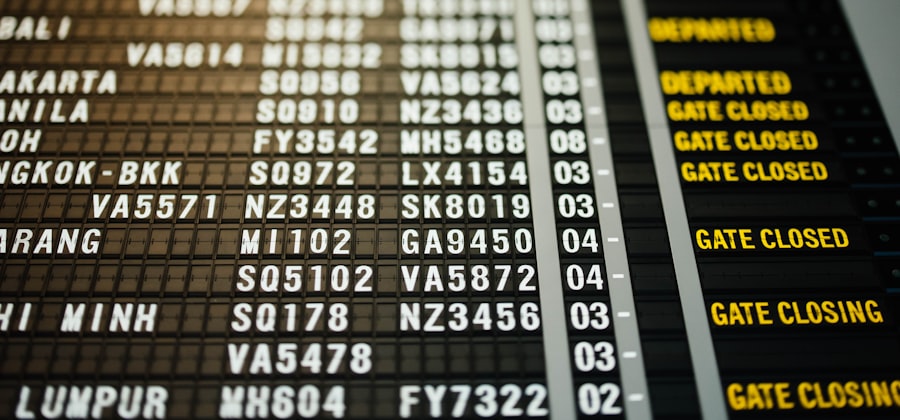
Photograph the departure board showing the delay or cancellation, and the desk notice if there is one. It is evidence that costs nothing and cannot be recreated later.
Ask staff for the reason in writing and write down the time you actually arrived. Keep receipts for food, transport and a hotel; those are reimbursable separately from the compensation.
- 1.Do this before leaving the airport. Nothing on the list can be obtained afterwards, and the claim can be filed months later.
- 2.A photo of the board with a timestamp is worth more than a note, because it carries its own date.
Claiming Yourself or Through a Service
You can claim directly and it costs nothing. Write to the airline with the flight number, date, booking reference and the compensation you are owed. Some pay within weeks; others do not reply, reject on a boilerplate excuse, or offer a voucher worth less than the cash.
A claims service takes the case on a no-win-no-fee basis and keeps a share — typically a quarter to a third — of what it recovers. You get less, but only if there is something to get, and they carry the correspondence and the legal threat.
The trade is straightforward: claim yourself and keep everything if the airline behaves, or hand it over and keep most of it without doing the work. For a rejected or ignored claim, the service is usually the difference between some money and none.
- 1.Try the airline once yourself first. If it pays, you keep the lot; if it refuses, nothing is lost by passing the case on afterwards.
- 2.Check what a service charges before submitting. The percentage varies and the difference on 600 euros is real money.
How Long You Have
Old flights still count. The deadline is set by national law rather than by the regulation, and it runs to years rather than months in most of Europe, so a flight from two or three summers ago may still be claimable.
The limit depends on where the claim is brought, which usually means where the airline is based or where the flight departed. In Switzerland the ordinary limitation period is measured in years, not weeks.
The practical limit is your own records. People rarely lose a claim to the deadline; they lose it because the boarding pass is gone and the booking email was in an account they no longer use.
- 1.Go through old bookings before assuming a past flight is too late. This is the most commonly abandoned money in travel.
- 2.Keep a folder of boarding passes and confirmations for a couple of years. It costs nothing and turns a vague memory into a claim.